- AI replaces SEO tasks (auditing, drafting, schema, clustering) — not the SEO role itself.
- AI is killing thin listicles and keyword-stuffing; it is strengthening original research, comparison tables, and topical clusters.
- BLS projects 8% growth in marketing analyst roles through 2032 — with AI adoption already priced into the forecast.
- Skills that grow: structured data depth, passage-level optimisation, entity graph architecture, cross-surface citation tracking.
A founder I spoke with had a slide in his board deck that read “cut SEO budget, AI is replacing it.” Two weeks later, his head of growth pulled the analytics. Half the brand’s new pipeline was coming from a Perplexity citation on a comparison page they had written eighteen months earlier. The slide quietly disappeared.
That tension is why this post exists. Will SEO be replaced by AI, will AI replace SEO, will AI kill SEO — all three questions are being searched by people making real budget decisions, and a vague answer in either direction costs them real money.
Will SEO be replaced by AI?
No. AI automates the execution layer of SEO — first drafts, audit triage, schema generation, keyword clustering. It does not automate the strategic layer: deciding which entity angle to own, which passages to engineer for citation, how to architect an internal link graph for AI search, or how to build the author authority that AI retrieval systems use to evaluate source trustworthiness. The SEO function shifts toward that strategic layer. It does not disappear.
Why AI search still depends on SEO
The most common mistake in the “will seo be replaced by ai” conversation is treating AI search as a separate system. It isn’t. When Google rolled out AI Overviews in May 2024, Google’s own announcement was explicit: AI Overviews are generated on top of the same crawl and index infrastructure that powers classic Search. No crawl, no index, no citation.
ChatGPT search and Perplexity work the same way. They send their own crawlers (GPTBot, PerplexityBot) to the same pages, lift passages, and credit the source. If your robots.txt blocks those crawlers, or your page has no schema, or your content is locked behind JavaScript those bots can’t render, you are invisible in AI search for the same reasons you would be invisible in classic search.
The plumbing of SEO — crawlability, indexing, structured data, internal linking — is the prerequisite for AI search visibility. AI Overviews didn’t replace the index. They sit on top of it.
What AI is killing in SEO
AI search has made several specific tactics non-viable. These were already producing declining returns before AI search; the shift has accelerated them to zero.
The thin informational post. A 600-word “what is [keyword]” post that summarises Wikipedia and the top-three SERP results has no reason to exist anymore. AI Overviews answer those queries directly. The post doesn’t get the click, and it doesn’t get cited — because it contains nothing an AI model couldn’t generate itself.
Keyword-density writing. Content crafted around hitting a keyword percentage rather than satisfying the query at the passage level produces content that AI search systems don’t lift. A model extracts the most self-contained, specific, evidence-backed passage it can find. Keyword-stuffed prose doesn’t produce those passages.
Shallow FAQ sections. The old pattern: copy the “People also ask” questions, write two-sentence answers, attach FAQPage schema. AI search doesn’t cite these because the answers are rarely specific enough to be worth lifting. A direct-answer block engineered for the query, with a primary-source citation, outperforms them consistently.
Rank-as-primary-KPI dashboards. A brand that ranks #1 for a query and gets zero AI Overview citation is no longer fully visible. The measurement framework that tracks only SERP position misses half the visibility picture in 2026.
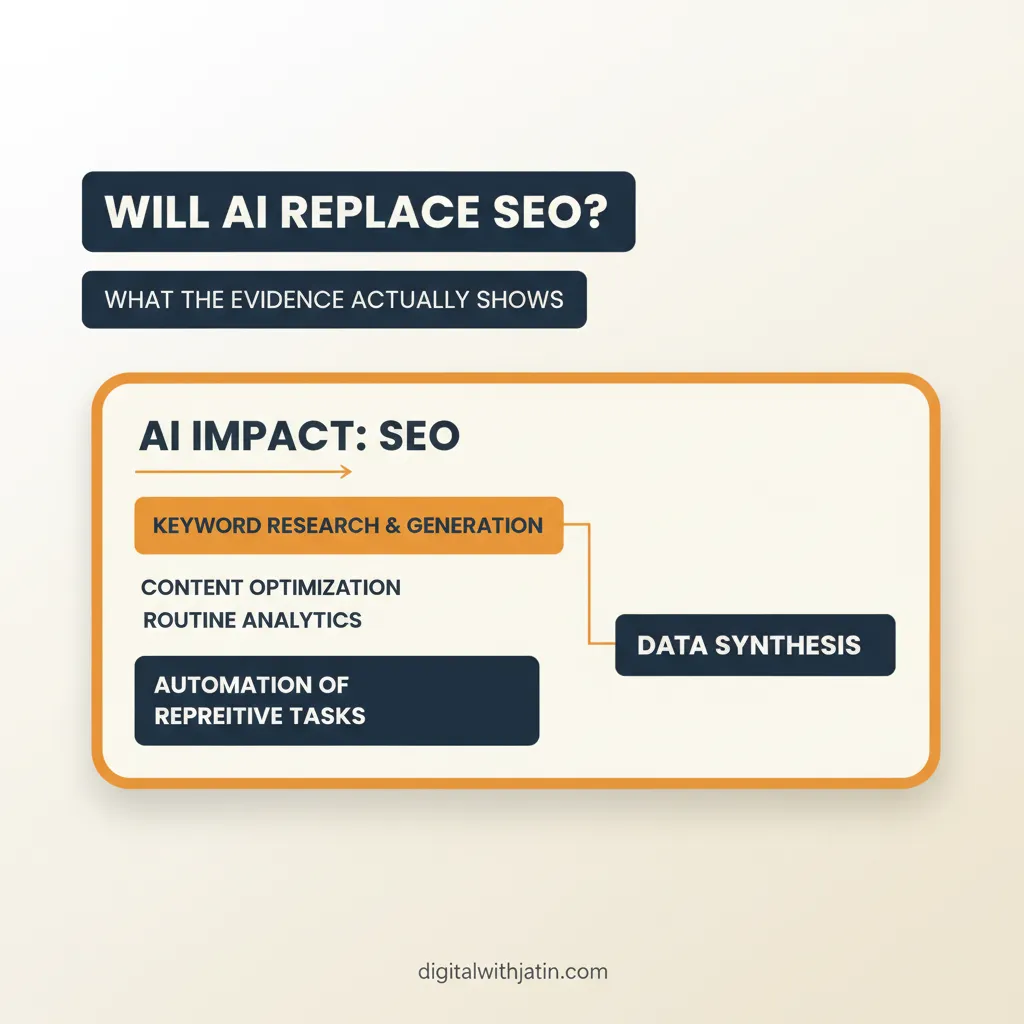
What AI is automating (but not eliminating)
To answer whether SEO will be replaced by AI accurately, separate the task level from the role level.
At the task level, AI tools are replacing or compressing: Audit data-gathering (Screaming Frog and Ahrefs Site Audit now summarise crawl findings in natural language, compressing a four-hour task to a 20-minute review). First-draft content (given a brief with keyword, intent, competitor headings, and internal link targets, AI produces a structurally sound draft that still needs human E-E-A-T editing). Schema markup generation (given page content and type, AI generates valid Article, FAQPage, or HowTo JSON-LD). Keyword clustering (what previously required a spreadsheet-heavy manual process now runs in minutes). Rank tracking and reporting (the data pull and formatting are automated; interpretation is not).
At the role level, none of those task-level shifts translate to role elimination. They translate to role compression at the junior execution level and role expansion at the senior strategy level. The same pattern appeared in accounting when Excel automated ledger entries, and in design when template tools automated basic production.
What AI cannot do in SEO
The tasks where AI has made the least progress are the ones that require practitioner-level judgment and real-world experience.
E-E-A-T signal production. The Experience and Expertise signals in Google’s Quality Rater Guidelines require a named author with a verifiable record. AI can draft the content; it cannot have the experience the content describes. A post that claims first-hand testing of a tool needs a human who actually ran the test.
Migration architecture. Deciding how to restructure a URL hierarchy, when to execute a redirect migration relative to a core update cycle, and which canonical strategy to use across a large site requires context that goes beyond pattern matching. AI tools can recommend technically correct migrations that would be catastrophic in timing or scope. The call still needs a practitioner.
Relationship-based link acquisition. Digital PR, journalist relationship building, and editorial link earning have no AI proxy. AI can identify targets; it cannot build the relationship that earns the placement.
Citation engineering judgment. Knowing which specific passage on a page is most likely to be lifted by an AI search system — and adjusting it at the sentence level — requires understanding how retrieval systems work alongside understanding your specific content. This is practitioner work.
What AI is making stronger
On the other side, these content approaches perform better in an AI search environment than they did in classic SERPs:
Original research and named experience. A post that documents first-hand test results across real client sites contains something no AI model can synthesise. The Google Quality Rater Guidelines explicitly weight Experience signals that a named author with a track record provides.
Deep how-to guides with verifiable steps. Structured, numbered guides with clear success conditions are what AI search cites when someone asks a procedural question. HowTo schema marks them as citable units.
Comparison tables. Perplexity in particular lifts comparison tables verbatim. A well-structured “X vs Y” table with accurate data is one of the highest-value citation formats available.
Topical cluster architecture. A domain that covers 30 related questions around a topic, linked through a pillar page, signals topical authority to AI retrieval systems the same way it signals it to Googlebot. The architecture that built classic topic authority is the same architecture that earns AI citation breadth.
Primary-source citation habits. Every numeric claim with an inline citation to a primary source (BLS, Google Search Central, peer-reviewed research) builds the trustworthiness signal AI search uses to decide whether a passage is worth lifting.
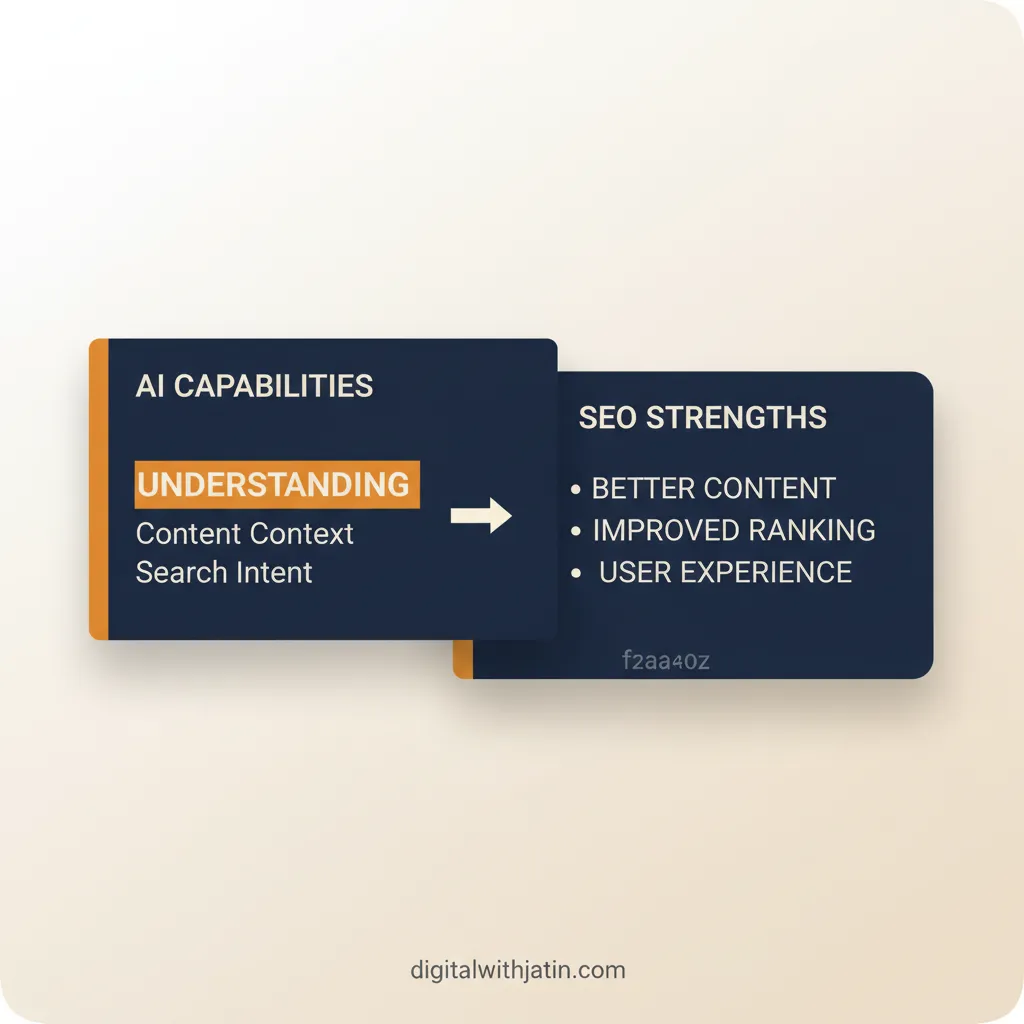
The labour market signal
The clearest answer to whether SEO will be replaced by AI is in employment data, not think-pieces. Per the U.S. Bureau of Labor Statistics occupational outlook, market research analyst roles — the category most SEO professionals fall under — are projected to grow 8% through 2032. That projection was published after GPT-4 and Gemini were public. The AI adoption wave is already priced into the forecast.
What the data does show is a composition shift. Roles that are pure execution (junior SEO analyst doing on-page audits, content writer producing 800-word listicles) are flat or declining. Roles that combine strategy with technical depth (SEO lead, GEO consultant, citation engineer) are growing. Total headcount grows. The mix changes.
The 5-step audit to test this on your own site
Rather than theorising, run this audit on your top 20 pages this week.
Step 1 — Passage check. Open each page and find the first H2. Is there a 50-60 word block underneath it that answers the page’s primary query without context from the rest of the article? If not, that’s the first fix.
Step 2 — Entity check. Ctrl+F for “they,” “it,” “the tool,” “the expert.” Every vague reference is a citation liability. Replace with specific names, tool names, and organisation names.
Step 3 — Citation check. Find every statistic in the page body. Does it have an inline link to a primary source? A percentage without a URL is a claim without authority. Add the source or remove the number.
Step 4 — Schema check. Run the URL through Google’s Rich Results Test. If Article and FAQPage schema aren’t present and valid, add them before doing anything else.
Step 5 — Crawler check. Pull robots.txt. Confirm GPTBot, ClaudeBot, and PerplexityBot are all allowed. This takes two minutes and is the most common reason a ranking page doesn’t get cited in AI search.
Pages that pass all five checks are AI-search-ready. Pages that fail two or more need structural fixes before tactics matter.
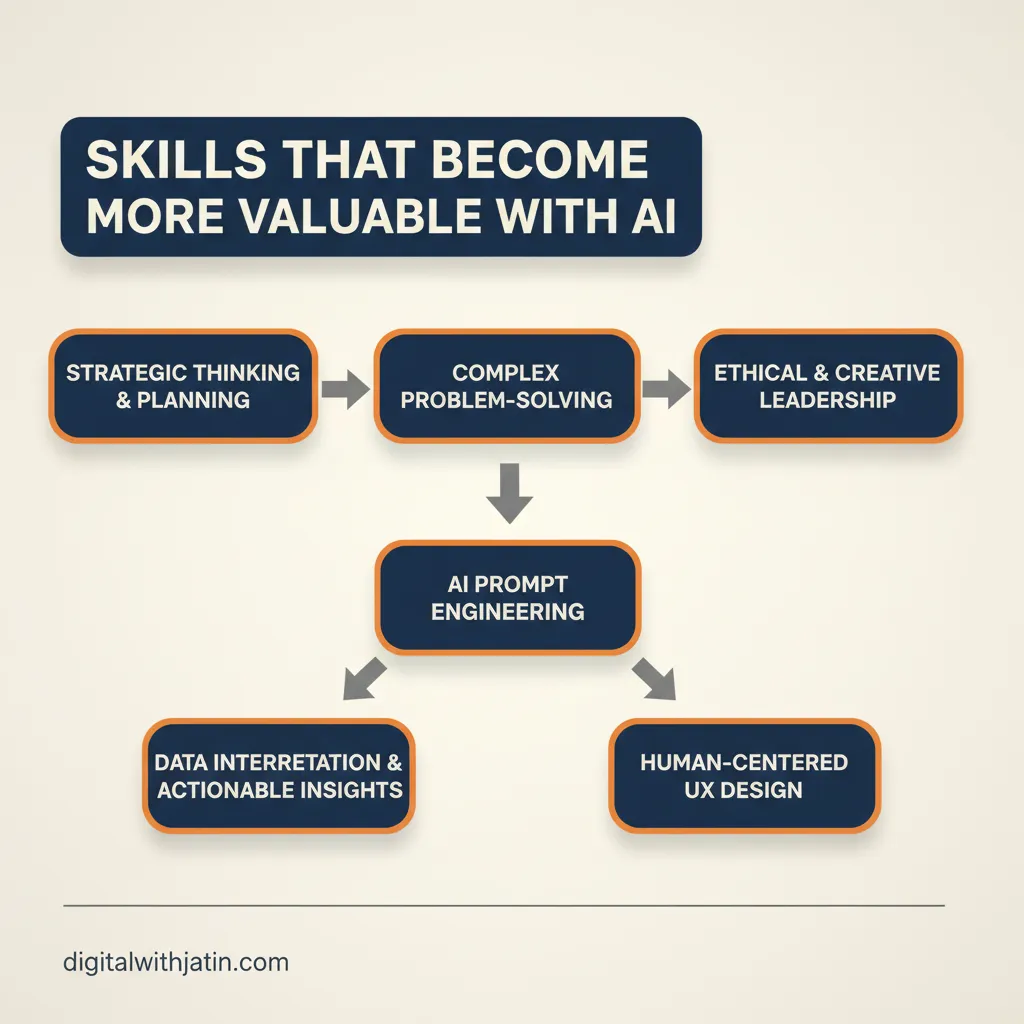
Skills that become more valuable with AI
The specific skills that grow in an AI search environment:
- Structured data depth. Every additional schema type (FAQPage, HowTo, BreadcrumbList, SpeakableSpecification) increases citation eligibility surface. Practitioners who can implement and validate these have a narrow but growing specialty.
- Passage-level optimisation. Writing the 50-word direct answer that gets lifted verbatim by an AI Overview is a distinct skill from writing a ranking page. It requires understanding both search intent and AI retrieval patterns.
- Entity graph architecture. Topical authority for AI search is built differently from domain authority for classic search. Internal link clusters built around named entities and concepts, not just keywords, are the new architecture.
- Cross-surface measurement. Reporting that tracks both SERP rankings and AI search citations (Profound, Otterly, AthenaHQ) alongside GSC requires a practitioner who understands both surfaces.
The founder who rewrote that board slide eventually gave it a new title: “expand SEO into AI search.” Same budget, broader mandate, better answer. That framing — not “will seo be replaced by ai” but “what does the expanded role look like” — is the one that ages well.
For the 12 tactics that translate these skills into citation outcomes, the full AI SEO playbook covers each one in detail. If you want this applied to your site’s specific citation gaps, AI SEO consulting is the next step.