- No single tool covers everything. The best AI tools for SEO split into four categories: research, content, technical, and citation tracking.
- The key distinction is AI-native (built to measure AI search) versus AI-added (legacy tools with AI features layered on). Both categories have a place in the stack.
- For most operations, the core stack is: Ahrefs (research and technical), Claude (content workflow), Surfer SEO (content scoring), and Profound (citation monitoring).
- Start with Google Search Console (free), add one tool per category in priority order, and only expand a category when the first tool has a clear gap.
The question I get most from agency SEO heads and in-house teams is not which tool to use. It is which tools to stop paying for.
Most teams have accumulated subscriptions across six or seven platforms with overlapping feature sets and unclear ownership of each tool in the workflow. If you are trying to find the best ai tools for seo without adding another redundant subscription, that problem is exactly what this guide addresses. The result of over-stacking is high spend and low utilisation.
Here is what this breakdown covers:
- The four categories every AI SEO stack needs (and what belongs in each)
- The AI-native vs AI-added distinction and why it matters for stack decisions
- Honest verdicts on Ahrefs, Surfer SEO, Screaming Frog, Profound, Claude, and six more tools
- The build order: which category to fund first and when to add the next
- Stack configurations for solo practitioners, agencies, and in-house teams
The honest breakdown of the best ai tools for seo is not a ranking. It is a categorisation by what each tool actually measures, with a clear line between tools that have earned their place in a workflow and tools that have not. No affiliate links. No rankings built around partnership programs.
Best AI Tools for SEO: The Direct Answer
The best ai tools for seo split into four categories: research (Ahrefs, Semrush), content (Surfer SEO, Claude), technical (Screaming Frog, Ahrefs Site Audit), and citation tracking (Profound, Google Search Console). No single tool spans all four well. A stack of one tool per category outperforms any single platform trying to do everything.
The key distinction is AI-native versus AI-added. AI-native tools measure what AI search measures. AI-added tools measure classic SEO signals with AI features layered on top. Both are necessary. Neither replaces the other.
The AI-Native vs. AI-Added Distinction
This is the most useful frame for evaluating any tool claiming to be an “AI SEO tool.” For the full picture of how these tools connect into a workflow, see the AI SEO pillar guide.
AI-native tools were designed from the ground up to measure AI search signals: citation share in AI Overviews, brand mentions in ChatGPT and Perplexity answers, passage-level retrieval patterns. These tools did not exist before AI search surfaces became significant. Profound, Otterly, and AthenaHQ are the clearest examples.
AI-added tools are established SEO platforms that have incorporated AI features into existing architecture. Ahrefs added AI clustering to its keyword tool. Semrush added AI content writing to its existing SEO suite. Screaming Frog added custom AI-assisted extraction to its crawl reports. These are good tools made more capable, not tools designed for the new measurement layer.
The mistake teams make is expecting AI-added tools to measure what AI-native tools measure. They cannot. Ahrefs does not track whether your page was cited in a Google AI Overview. That is not what Ahrefs was built for. The mistake in the opposite direction is buying four AI-native tools while ignoring category one entirely and having no solid research foundation.
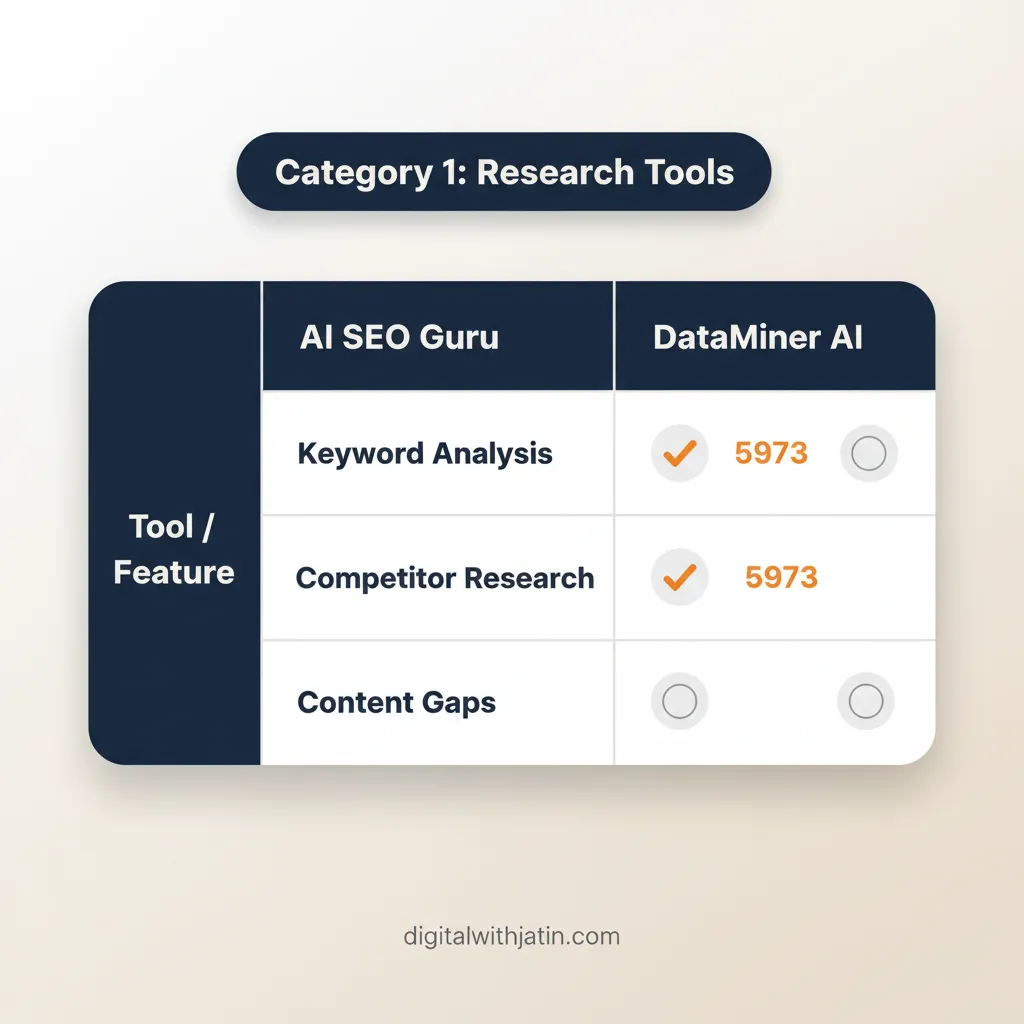
Category 1: Research Tools
Ahrefs
Ahrefs is one of the most comprehensive SEO research platforms available. Its keyword database covers multiple search engines, its backlink index is among the largest and most frequently updated, and its SERP history data allows competitive analysis going back years. AI additions include keyword clustering (grouping semantically related keywords without manual spreadsheet work), content gap analysis that identifies topics competitors rank for that you do not, and AI-assisted “Opportunities” reports that surface quick-win positions.
The AI features added in 2024 and 2025 are genuinely useful for clustering. Feeding a seed list of 50-100 keywords into Ahrefs’ clustering tool produces grouped topic sets in seconds. The Content Gap tool identifies topics competitors rank for that your site does not yet cover.
Where it falls short: Ahrefs does not generate content, score content against competitor pages, or track AI citation share. The interface is powerful but not friendly to new users.
Verdict: The closest thing to a required tool in a professional AI SEO stack. If you use only one research platform, use Ahrefs. The site audit module is strong enough to make Ahrefs a two-category tool covering both research and basic technical auditing. For context on how AI is changing SEO research, that cluster post covers how these research workflows are evolving.
Semrush
Semrush covers competitive research, keyword gap analysis, and content marketing planning. It adds a few categories where it outperforms Ahrefs: local SEO data, social media competitive analysis, and paid search intelligence. Its AI Writing Assistant and ContentShake tool attempt to bridge research and content production in a single platform.
Where Semrush leads over Ahrefs is in advertising data and competitor ad copy analysis. For pure SEO research, either platform covers the core use case. Teams already using one have no compelling reason to switch based on AI features alone. The ContentShake output requires significant editing to meet a quality bar for competitive content.
Verdict: Strong alternative to Ahrefs, particularly for teams that also need local SEO, paid search, or social competitive data in the same platform. For pure organic SEO research focused on AI SEO workflows, Ahrefs is the more targeted choice. The two tools are rarely both necessary at full subscription level.
Category 2: Content Tools
The best ai tools for seo in the content category serve two distinct functions: generating the content brief and producing the first draft. These are different jobs, and the tools that do them best are not the same tool.
Surfer SEO
Surfer SEO is the practitioner standard for NLP-based content optimization. The Content Editor shows a real-time score based on how well a draft covers the terms and headings present across the top-ranking pages for a given query. The Outline Builder uses AI to suggest heading structures based on SERP analysis. As you write (or as an AI tool generates a draft), Surfer’s editor scores the content in real time against the benchmark.
The brief generation alone is worth the subscription for teams producing content at scale. It replaces hours of manual SERP analysis with a structured brief in minutes. The AI content audit feature also scores existing published content and identifies optimisation gaps.
What Surfer does not do: it does not write good content. The AI generation features produce serviceable structure with thin prose. The value is in the scoring and briefing layer, not the generation.
A writer using the brief and score alongside their own prose will outperform the AI generation output consistently. Surfer also scores content against existing ranking pages, so if the ranking pages are all poorly written, Surfer will score you relative to that low bar.
Verdict: The best specialised tool for content briefing among the best ai tools for seo. Use Surfer to generate the brief, Claude to produce the first draft against that brief, and a human editor to add expertise and fact-check. That three-step process produces better output than any single tool alone.
Claude
Claude (Anthropic’s large language model, available via API and at claude.ai) handles the content production step in an AI SEO workflow. In a structured brief pipeline, Claude takes a Surfer-generated brief plus editorial guidelines and produces a first draft in minutes. Beyond drafting, Claude is used for schema JSON-LD generation (structured data formatted correctly and ready to inject), FAQ drafting, meta description writing, internal link mapping, and content auditing when given a scoring rubric.
Schema generation is where Claude earns its place most clearly. FAQPage JSON-LD from a list of questions and answers, Article schema with the correct fields, HowTo schema from a step-by-step process: Claude generates valid JSON-LD quickly when prompted correctly. Claude’s longer context window also makes it possible to process full existing articles for gap analysis rather than working section by section.
Where it falls short: Claude does not access real-time search data. It cannot tell you what is currently ranking or what queries are trending. Vague instructions produce generic content. The brief quality is the primary quality control lever.
In client projects throughout 2026, I have used the Surfer-to-Claude handoff for content production across 15+ clients in the B2B SaaS and professional services verticals. The brief quality is the lever every time: a well-structured brief produces a usable draft, and a vague one produces generic output regardless of the model.
Verdict: The most flexible content and workflow tool in the stack. Not a standalone SEO platform but the execution layer that connects brief, draft, schema, and metadata generation into a repeatable pipeline. Via API connected to n8n, Claude moves from useful to genuinely time-saving at scale. For a practical look at how this fits into AI SEO automation workflows, the automation cluster covers the technical setup.
MarketMuse and Clearscope
Both are alternatives to Surfer with slightly different NLP scoring methodologies. They are more expensive at the entry tier and better suited to enterprise content teams producing high volumes of research-heavy content. For solo practitioners or small teams, Surfer covers the same core function at a lower entry point. For a deeper comparison of content optimization approaches, the AI content SEO guide walks through the scoring methodology differences.
Category 3: Technical SEO Tools
Among the best ai tools for seo, the technical category is the one most teams already have covered, often with tools they are underusing.
Screaming Frog
Screaming Frog is the practitioner-standard technical SEO crawler, used across agencies and in-house teams worldwide. It crawls a site’s pages, resources, and links and returns a detailed report covering status codes, redirect chains, canonical tags, meta information, heading structure, image alt attributes, response times, and indexation signals.
The custom extraction feature lets you pull any element from any page using CSS selectors or XPath, and export them for analysis without a spreadsheet. Recent versions added AI-powered content analysis that flags thin content, duplicate content patterns, and missing schema at scale. The AI integration also lets you connect an API key to generate meta descriptions for pages that are missing them.
For sites under 500 pages, the free tier covers most technical audits. For larger sites, the paid license delivers strong ROI: a flat annual fee regardless of how many pages you crawl, running from your own machine without rate limits or credit costs.
Where it falls short: Screaming Frog does not measure Core Web Vitals at scale or track AI citation share. For CWV measurement, use PageSpeed Insights or the Core Web Vitals report in Google Search Console.
Verdict: Essential for technical audits. Run it before any content work begins on a site, after major structure changes, and on a monthly schedule for any site with active content operations.
Sitebulb
Sitebulb produces visual crawl reports with prioritized recommendations. Where Screaming Frog gives raw data, Sitebulb gives a scored audit with explanations written for clients who are not technical. The Hints system flags issues and explains why each one matters, which compresses the time from crawl to deliverable.
For agencies presenting technical audits to clients, Sitebulb’s output format is significantly faster to turn into a report. The audit prioritization engine is useful for large sites where triaging thousands of issues manually is not practical.
Ahrefs Site Audit
Ahrefs Site Audit is the cloud-based alternative to desktop crawlers. It covers crawl health, indexation signals, Core Web Vitals integration, internal linking analysis, schema detection, and hreflang validation in a single interface. For teams already using Ahrefs for research, the site audit module adds technical coverage without a separate tool subscription. Scheduled crawls mean the audit runs automatically and alerts on new issues rather than requiring manual trigger.
The technical category verdict: Screaming Frog for in-house teams who want raw data and for deep one-time audits. Sitebulb for agencies producing client deliverables. Ahrefs Site Audit for teams that want scheduled, cloud-based auditing with less manual setup overhead. For a deeper look at what AI simplifies in technical SEO work, that post covers the audit workflow end to end.
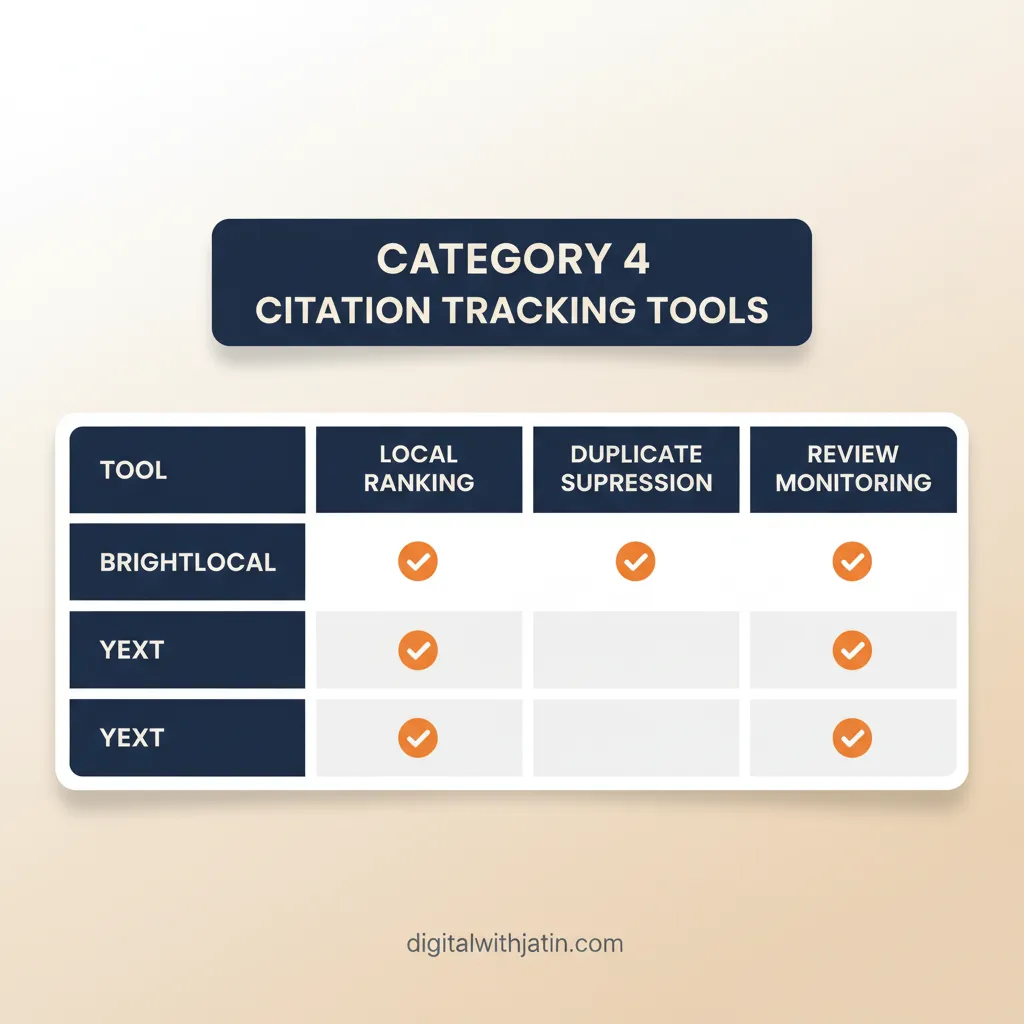
Category 4: Citation Tracking Tools
This category did not exist in traditional SEO tool stacks. It exists now because rank trackers do not measure whether your content is cited inside Google AI Overviews, ChatGPT, or Perplexity. If you are only tracking rank and not tracking citation share, you are measuring half the picture on informational queries.
Profound
Profound is a leading dedicated AI citation monitoring platform available as of mid-2026. It monitors your pages across Google AI Overviews, ChatGPT, and Perplexity. It tracks which pages are cited as sources, which queries trigger those citations, how citation share changes over time, and how your citation presence compares to competitors on the same queries.
Without Profound (or a comparable AI citation tracker), you have no way to know whether your content is being picked up by AI search surfaces beyond manual spot-checking. Manual checking is not scalable across dozens of target queries.
Where it falls short: Profound is a newer tool and the query set you track requires thought and ongoing maintenance. It does not automatically identify all queries where you could be cited but are not. The “why” behind a citation gap requires manual review of the pages being cited versus those that are not.
Verdict: Required for any SEO operation that takes AI surface visibility seriously. Not optional if AI search visibility is a stated goal. The only tool in this list that answers the question: is the best ai tools for seo strategy I have built actually producing citation share?
Otterly
Otterly monitors AI search visibility across platforms and can track specific queries over time. The alert feature notifies you when a competitor gains or loses a citation in a tracked query set. It focuses specifically on Perplexity and ChatGPT monitoring, which makes it narrower in scope than Profound but useful as a cross-check.
AthenaHQ
AthenaHQ covers similar ground with a focus on enterprise-scale query tracking and competitive benchmarking. It shows not just whether you are cited, but how your citation share compares to competitors on the same queries.
None of these tools are yet as mature as the research or content tool category. But without at least one of them, an AI SEO strategy produces no measurable feedback.
Google Search Console
Google Search Console remains the most authoritative source for Google-specific performance data. It reports impressions, clicks, average position, and CTR by query, page, device, and search appearance type. The URL Inspection tool is the most reliable check on whether a specific page is indexed.
Every other tool in the stack produces estimates, scores, or projections. GSC reports what actually happened in Google’s results for your site.
Per Google’s own documentation, GSC data carries a 48-72-hour reporting delay and does not show data beyond 16 months. It does not show competitor data or cover AI citation share. But it is free and non-optional. Pair it with Profound to cover both the Google organic layer and the AI citation layer in a single reporting workflow.
Verdict: The anchor of the reporting stack. Check it weekly. It is the one source of truth in a field full of estimates.
What to Avoid
Three patterns that waste money on the best ai tools for seo.
Paying for AI features you could get from a base LLM. If a tool charges a premium for “AI content writing” that is essentially a wrapper around ChatGPT, you are paying for integration, not capability. Evaluate whether the integration saves enough time to justify the cost delta.
Tracking rank without tracking citation. On informational queries, rank and citation are separate signals. A site that ranks position 3 and earns consistent AI Overview citations is in a stronger position than a site that ranks position 1 with no citation presence. You need both metrics.
Adding tools before defining the feedback loop. A tool that is not connected to a decision is overhead. Before adding any new platform, define what question it answers and how the answer changes what you publish next. The most common mistake is buying four content tools while ignoring citation tracking entirely.
Tool Stack at a Glance
| Category | Primary Tool | Alternative | Best For | Est. Cost/mo |
|---|---|---|---|---|
| Research | Ahrefs | Semrush | Keyword research, backlinks, competitive analysis | $99-$199 |
| Content | Surfer SEO + Claude | Clearscope | Brief generation, draft production, schema | $89-$149 + API |
| Technical | Screaming Frog | Ahrefs Site Audit | Crawl audits, schema detection, redirect analysis | $0-$25/yr flat |
| Citation | Profound | Otterly | AI Overview, ChatGPT, Perplexity citation tracking | $50-$200+ |
| Reporting | Google Search Console | (none) | Google organic performance, indexation | Free |
Pricing is approximate as of May 2026. Verify current tiers on each vendor’s pricing page before committing.
The Stack by Use Case
The right configuration of best ai tools for seo depends on team size and what you are measured on.
Solo practitioner or small team:
- Ahrefs (research and technical)
- Google Search Console (free, non-optional)
- Claude API (content and schema)
- Surfer SEO (brief generation)
- Add Profound when AI citation share becomes a client or stakeholder metric
Total cost is manageable and coverage across all four categories is solid. This is the minimum viable stack for the best ai tools for seo on a budget.
Agency managing multiple client sites:
- Ahrefs at agency tier (or Semrush for accounts needing local and paid search data)
- Surfer SEO for brief generation at volume
- Claude API connected to n8n for automated brief-to-draft pipelines
- AthenaHQ for citation benchmarking on clients where it is a KPI
- Screaming Frog for deep audits on new client onboardings
In-house SEO team at a growing brand:
- Google Search Console as the base layer
- Ahrefs for research and competitive analysis
- Claude for content workflow
- Surfer SEO for scoring drafts against the SERP benchmark
- Screaming Frog or Ahrefs Site Audit for quarterly technical audits
- Profound for measuring AI surface visibility on branded and primary informational queries
For a look at how AI SEO automation connects these tools into a single pipeline, that post covers the n8n-based workflow in detail.
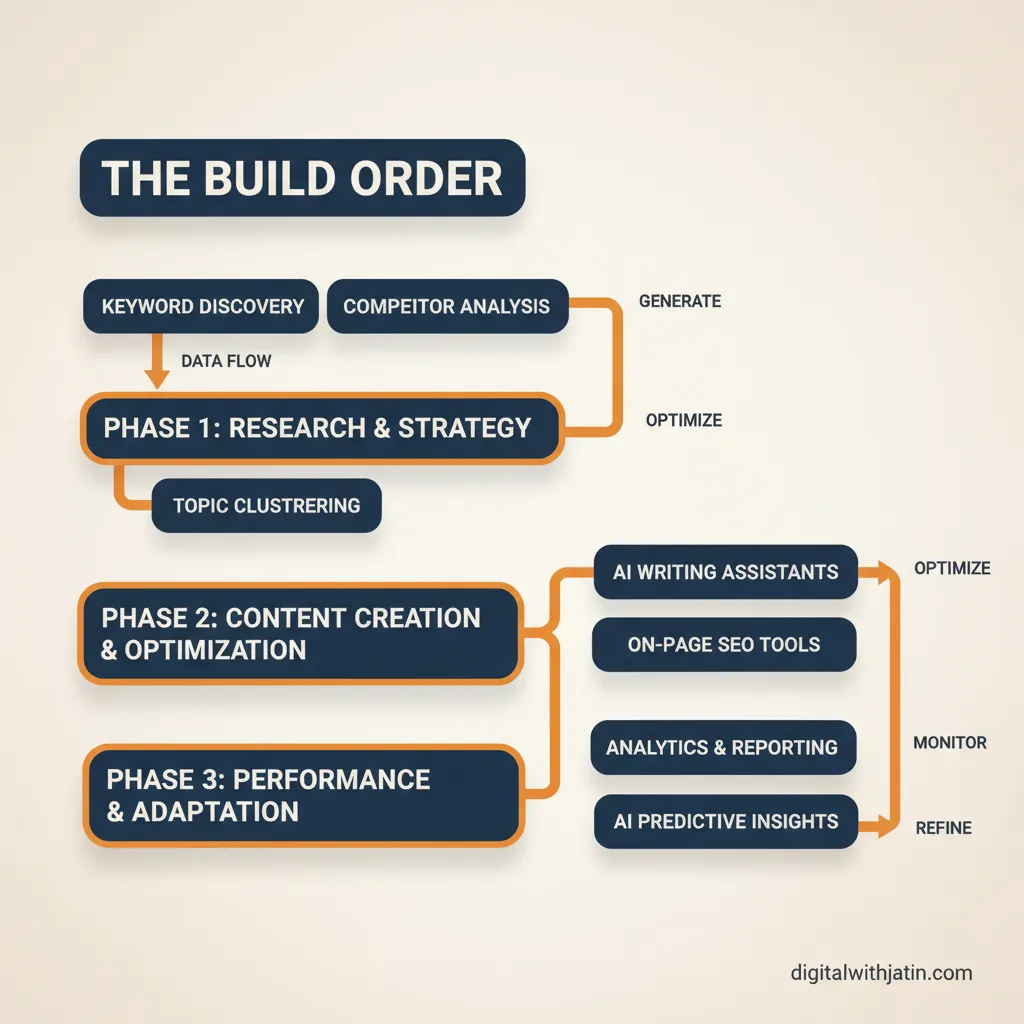
The Build Order
If you are building the best ai tools for seo stack from scratch, this is the order that makes sense for most practitioners.
First: Google Search Console. It is free, it is primary-source data, and it tells you which queries drive impressions and clicks before you pay for anything else.
Second: Ahrefs or Semrush, depending on which your team has existing experience with. The difference in features does not matter as much as whether your team will actually use it.
Third: Surfer SEO if you are publishing more than 4 pieces of content per month. Below that volume, the cost-per-brief math does not work.
Fourth: Screaming Frog or Sitebulb for technical auditing. Screaming Frog for in-house teams who want raw data. Sitebulb for agencies producing client deliverables.
Fifth: Profound, Otterly, or AthenaHQ once you have content published and are ready to measure AI visibility. Starting this too early, before you have pages in the index that are optimised for passage citation, gives you data without anything to act on.
The stack decisions matter less than the workflow connecting them. A brief from Surfer, a draft from Claude, an editorial review against an expertise checklist, schema generated and validated, then published with GSC verification is a repeatable, quality-controlled pipeline. Having all the right best ai tools for seo with no defined workflow between them produces inconsistent output regardless of how capable the individual tools are.
For a full service engagement that uses this stack with Claude and n8n automation layered on top, the AI SEO service page covers what that looks like in practice.
Frequently Asked Questions
What are the best AI tools for SEO?
The best AI tools for SEO split into four categories: research (Ahrefs, Semrush), content (Surfer SEO, Claude), technical (Screaming Frog, Ahrefs Site Audit), and citation tracking (Profound, Google Search Console). One tool per category is the baseline stack.
What are AI SEO tools?
AI SEO tools are software products that use machine learning or large language models to assist with search engine optimisation tasks. They fall into four categories: AI-assisted research, AI content generation and optimisation, AI-powered technical audit, and AI citation tracking.
What is the difference between AI-native and AI-added SEO tools?
AI-native tools were built for AI search measurement from the ground up. Profound, Otterly, and AthenaHQ exist specifically to track citation share across AI surfaces. AI-added tools are established platforms that incorporated AI features into existing architecture.
Is Ahrefs an AI tool for SEO?
Ahrefs has added AI features including keyword clustering, content gap analysis, and position tracking insights. Its core value remains its crawl data, backlink index, and SERP history. It is best categorised as an AI-augmented research and audit platform.
What is Surfer SEO used for?
Surfer SEO analyses top-ranking pages for a target keyword and produces a content brief specifying term coverage, recommended word count, and a live content score. It is used primarily to brief writers and score content before publishing.
What is Profound used for in SEO?
Profound is an AI citation monitoring platform. It tracks which sources appear in AI Overview, ChatGPT, and Perplexity responses for target queries, reporting citation share, citation frequency, and the specific answer surfaces where your content appears or is absent.
Can Claude be used as an SEO tool?
Yes. Claude handles content drafting, schema JSON-LD generation, keyword clustering, meta description writing, and FAQ drafting at production scale. Used with a clear brief and structured prompts, it reduces execution time on repeatable SEO tasks.
What AI tools track Google AI Overview citations?
Profound, Otterly, and AthenaHQ are the three tools built specifically for AI citation tracking. They monitor whether your pages appear as cited sources inside Google AI Overviews, ChatGPT search results, and Perplexity answers.
Are AI SEO tools worth the cost?
For teams publishing more than 10 pieces per month, time saved on keyword clustering, content brief production, and crawl triage typically justifies mid-tier subscriptions within the first month of consistent use. For solo consultants, free tiers and Google Search Console cover more than most realize.
Can AI tools replace an SEO agency?
No. AI SEO tools automate execution tasks: keyword clustering, brief generation, crawl analysis, citation monitoring, and metadata drafting. They do not do strategy, client communication, competitive positioning, or judgment calls on content angles. The tools do not replace the thinking.
How many AI SEO tools do I need?
One per category is the starting point. Four categories means a four-tool minimum stack: one research tool, one content tool, one technical audit tool, and one citation tracking tool. A second tool in any category is only justified when the first has a specific, identified gap.
How much does a full AI SEO tool stack cost?
A complete stack (Ahrefs Lite, Surfer SEO Essential, Screaming Frog annual, Profound entry-level, Claude API) runs approximately $400 to $700 per month depending on usage volume and Profound query count. Google Search Console is free. Prioritise Ahrefs and Claude first.
What is the best free AI tool for SEO?
Google Search Console is the best free tool with direct SEO value. It provides Google-specific performance data, indexation status, Core Web Vitals field data, and crawl coverage at no cost. Screaming Frog’s free version covers up to 500 URLs. No free tool covers AI citation monitoring at depth.
The best ai tools for seo are only as useful as the workflow that connects them. Start with one tool per category, define what question each one answers, and only expand when a specific gap is identified. That discipline separates a stack that compounds over time from one that just accumulates invoices.